
About Meshtastic
Meshtastic is an open-source project that enables users to create a long-range, low-power mesh network using LoRa radios. This decentralized network allows communication even in areas without cellular or Wi-Fi coverage, making it ideal for outdoor activities or crowded events like music festivals where traditional networks may fail.
Additionally, Meshtastic supports experimentation through GPIO (General Purpose Input/Output) pins and Python integration. Users can connect sensors—such as environmental monitors or GPS modules—to transmit critical data over the network. This could be valuable in emergency scenarios, such as a crash detection system using accelerometers or alerts for when someone leaves a defined area.
With Python, custom scripts can be run on Meshtastic devices, facilitating innovative applications, including BBS systems and text-based internet services, enhancing the mesh network's capabilities.
Personal Objectives
This project serves as part of an initiative to expand the coverage of the NEMARC mesh network into Baltimore. I hope to achieve this by establishing a community of Meshtastic users in the Baltimore area and placing nodes in strategic places to enhance the coverage of the network. You can find more information on the NEMARC Meshtastic project here.
Currently, I am focused on expanding coverage throughout Baltimore by working to deploy more nodes throughout the city and improving upon my existing nodes.
In addition to expanding the mesh, I am also experimenting with innovative ways to leverage IP tunneling and the Meshtastic Python Library to unlock new possibilities for mesh network applications.
K3AYV Mesh Node
Here is a glimpse into my current set up and some purchase links so you can join the fun too!
| Component | Purchase Link |
|---|---|
| Transciever | Heltec V3 |
| Antenna | Rokland 8dBi Low Profile Omnidirectional Antenna |
| Bidirectional 1 Watt Amplifier | AirBuddy AB-868-5V |
| Connectors | |
| Case | 3D Printed Case by HD_Creator |
| Power Sources |
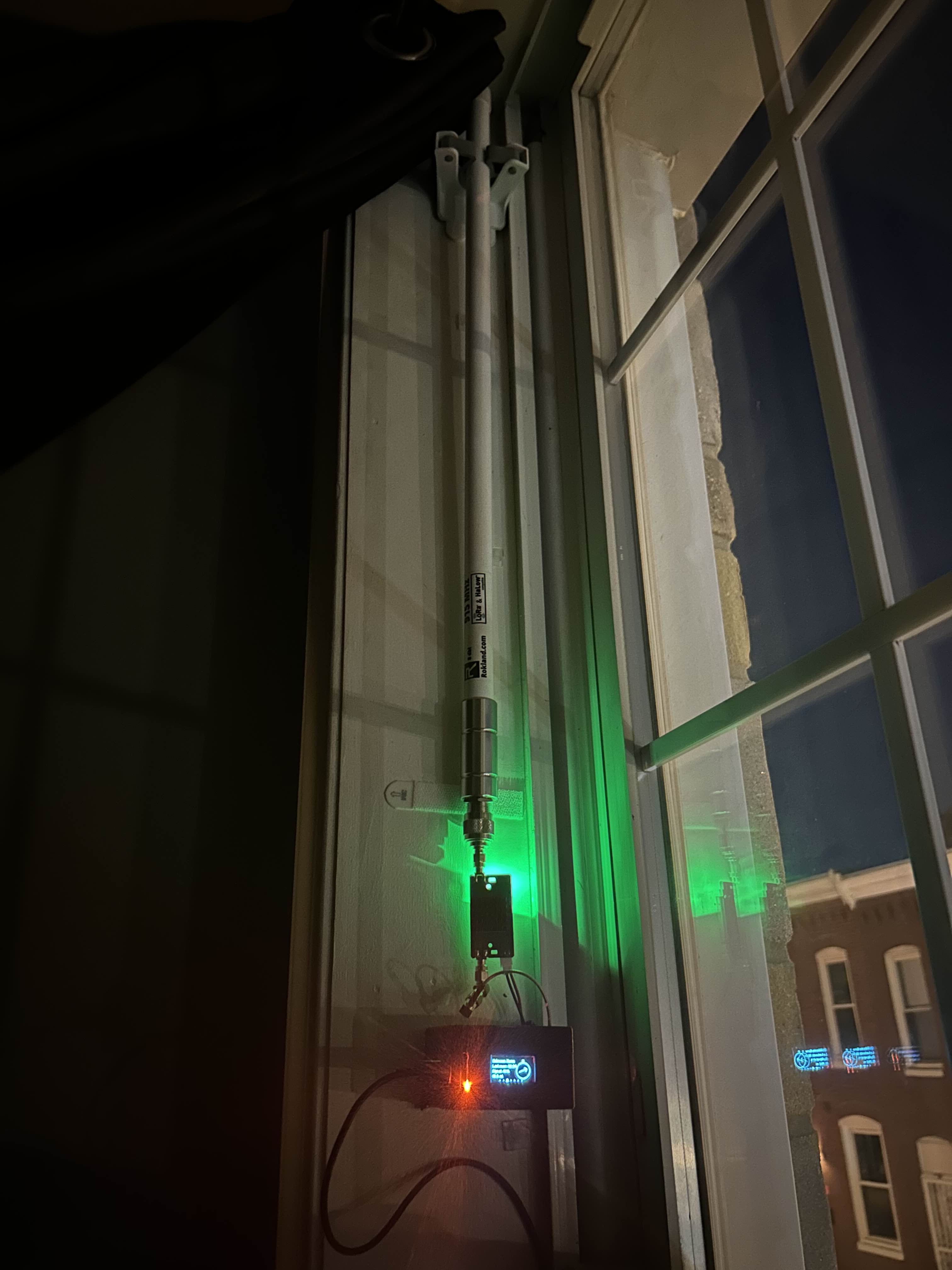
This is my primary node, known on the Mesh as AYV1. It is situated on the top floor of my home, offering a nice view over the roofline of the neighboring row. Using an indoor antenna is a compromise for greater height, but it has not proven to be a hindrance to my coverage, albeit with slightly more directional coverage. You can view the real-time performance of this node by checking my MeshSense.
Node Assembly and Setup: Key Details
Power Management
The power leads from the AirBuddy amplifier are connected in parallel with the battery leads, allowing both the Heltec V3 board and the amplifier to be powered simultaneously from the same 5V USB charger. Additionally, the battery serves as a backup in the event of a power outage. When the charger is plugged in, the node idles at approximately 4.4V according to MeshSense. This voltage may fluctuate slightly between 4.2V and 4.5V with use. While you may notice a small voltage drop during repeated transmissions, I have not observed a decrease greater than 0.2V at the time of writing. The idle current draw is around 0.12 amps. When active, the node typically consumes between 0.24 and 0.36 amps. During charging, the current draw increases to approximately 0.66 amps. As I am continuously testing the system, these metrics are subject to change.
Case Modification for Power Wire
A slight modification was made to the case to pass the power wire through. I widened an opening originally meant for an SMA connector and used a heat gun to fit the wire. Currently, no Meshtastic cases are designed to accommodate an amplifier, but maybe you're the creative person to make one! As a result, the amplifier board is exposed. However, given the board's low current draw and affordable price, I'm not concerned. Special thanks to Zach KC3YTC for printing these cases for me—I'd be lost if I had to figure out how to use a 3D printer myself!
Securing IPEX Connectors
Those IPEX connectors can be a real pain to keep in place, especially when you're trying to route wires around. A common solution is to use adhesive, such as hot glue or heat shrink, to secure the connector. In my case, I used a small dab of Gorilla fabric glue, as that's what I had on hand. However, I wouldn't recommend using fabric glue if your node will be exposed to extreme heat.
Benefits of the 45-Degree SMA Bevel Connector
The 45-degree SMA bevel connector is not strictly essential, but it can be helpful if you need to adjust the antenna. The bevel allows the connector to swivel, which reduces the risk of loosening or damaging the connections while maneuvering the antenna.
Case Mounting and Antenna Placement
The case is mounted in my window frame using Scotch-Mount Extreme Double-Sided Tape, rated for 30lbs. It might be overkill, but it's tough to remove and protects against curious cats, accidental bumps, or falling curtain rods—lessons learned from experience. Previously, I used Command Velcro strips with a slimmer setup. The antenna is held in place with a broom holder, which you can find at your local Target, and it's been secure for quite a while.
Coverage Splat Map
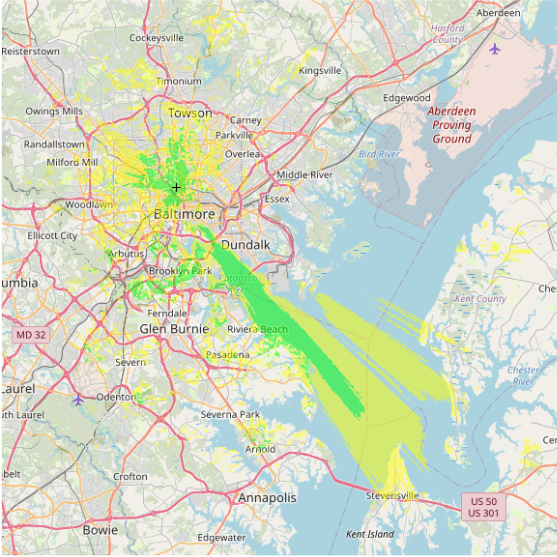
Above is a prediction for the coverage of my Meshtastic node as generated with VE2DBE's Radio Mobile tool.